
1/30 German “Tiger” Heavy Tank Pre-production [No.100] – Ready-Made Metal Model | Tank Workshop1/30 德国“虎式”重型坦克极初期型 [100号] 成品金属模型 | 战车工坊
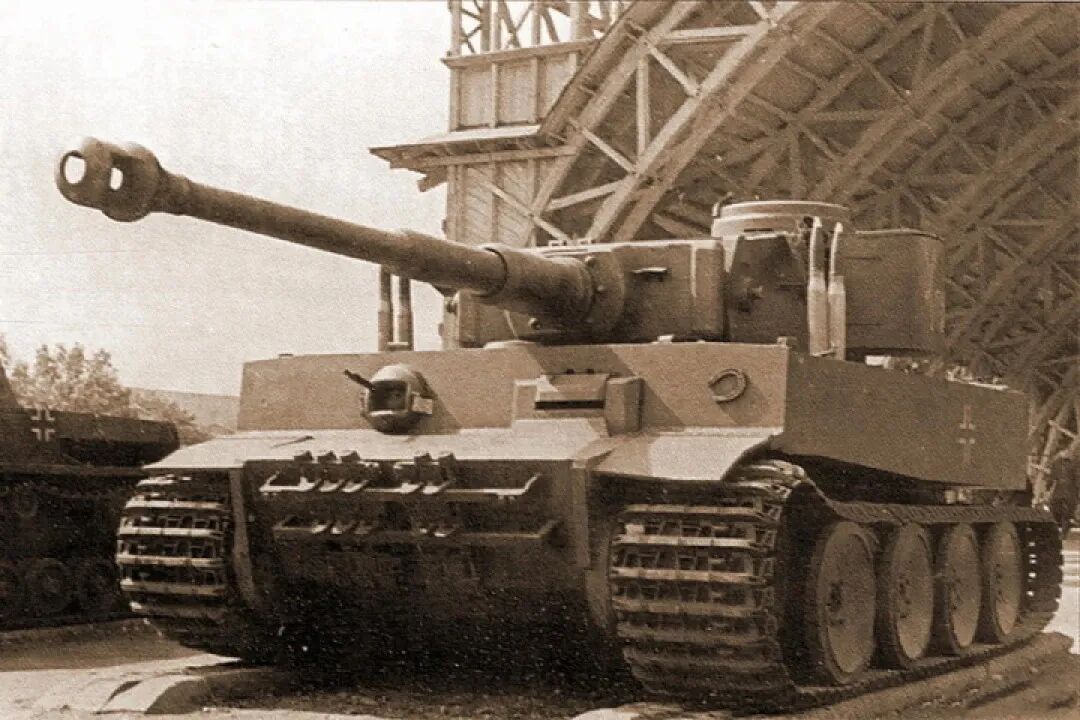
The Tiger that changed hands
Few individual tanks of the Second World War have a story as well documented as Tiger “100”. It belonged to schwere Panzer-Abteilung 502 (Heavy Tank Battalion 502), the unit that took the Tiger into combat for the first time near Mga, on the Leningrad front, at the end of August 1942. These were the very first Tigers to leave the factory. Their early-pattern details, such as the stowage box mounted on the turret side, have led collectors to call them “Ear Tigers”.
The terrain around Leningrad was a poor match for a 56-tonne tank. The battalion fought among forests, peat bogs and flooded ground. Breakdowns and bogged-down vehicles were a constant problem in those first months, and much of the fighting was about keeping a handful of Tigers running at all.
Captured during Operation Iskra
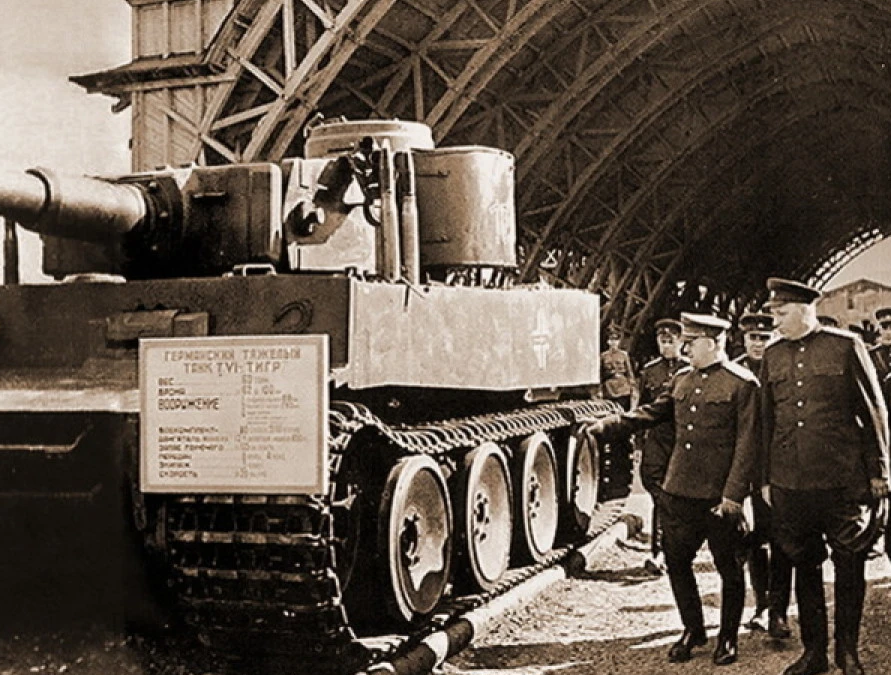
In January 1943, the Red Army launched Operation Iskra (“Spark”) to break the siege of Leningrad. On 18 January, the day the Volkhov and Leningrad Fronts linked up, Tiger “100” (chassis number 250009) approached Workers’ Settlement No. 5. According to the battalion’s own loss report, the tank became stuck in a peat pit and its crew had to abandon it. The settlement had already fallen to Soviet troops. The tank’s commander was Johannes Bölter, who later became one of the Tiger’s best-known aces.
Soviet troops recovered the tank largely intact. Together with Tiger “121”, captured in the same area, it gave the Red Army its first close look at Germany’s new heavy tank. Marshal Georgy Zhukov later recalled ordering a special group to seize such a tank and tow it back to Soviet lines. Period photographs are widely reported to show Zhukov inspecting the captured Tiger.
From proving ground to Gorky Park
Tiger “100” was sent to the NIBT proving ground at Kubinka. In April 1943, its engine, armament and equipment were removed, and the hull and turret were fired on by guns of various calibres to find the weak points in the armour. The findings were passed on to Soviet front-line units, and they spurred the development of more powerful Soviet tanks and guns. In June 1943, the tank went on public display at the exhibition of captured equipment in Moscow’s Gorky Central Park of Culture and Rest. It did not survive: like most war trophies of the period, it was later scrapped.
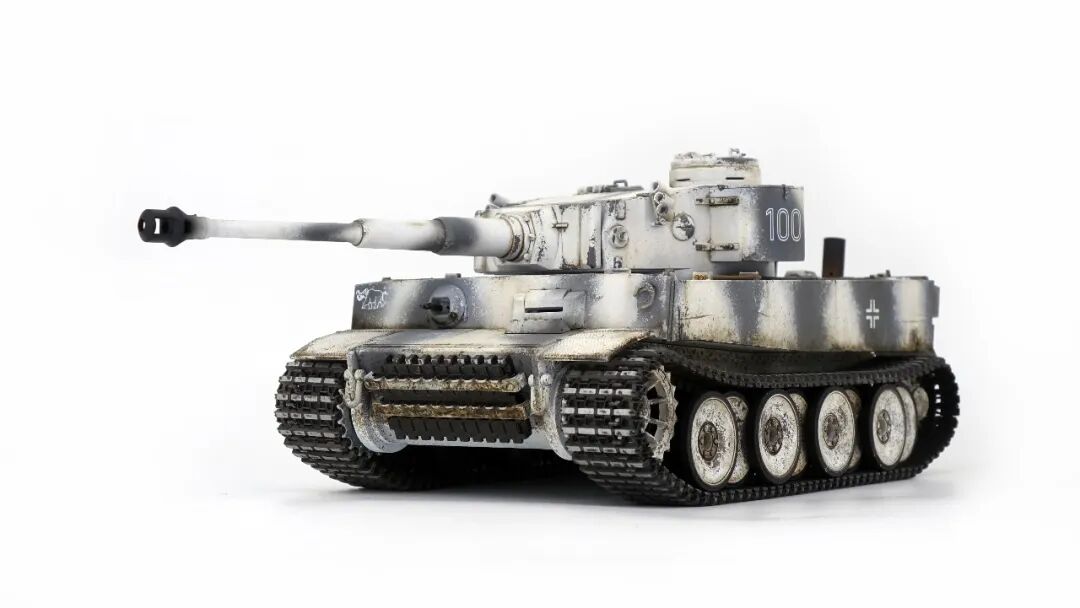
Early-pattern details
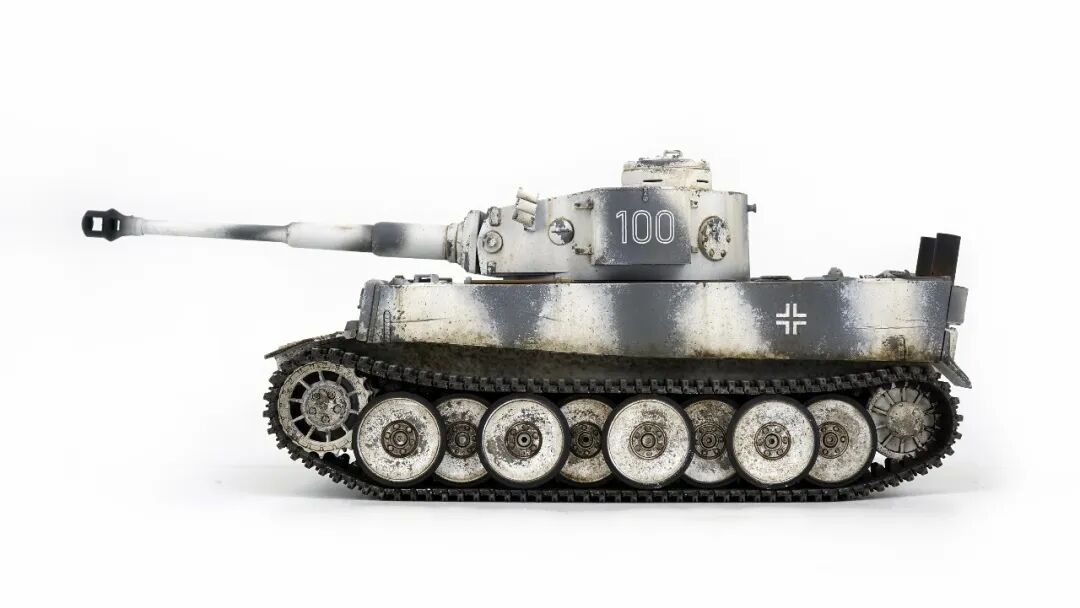
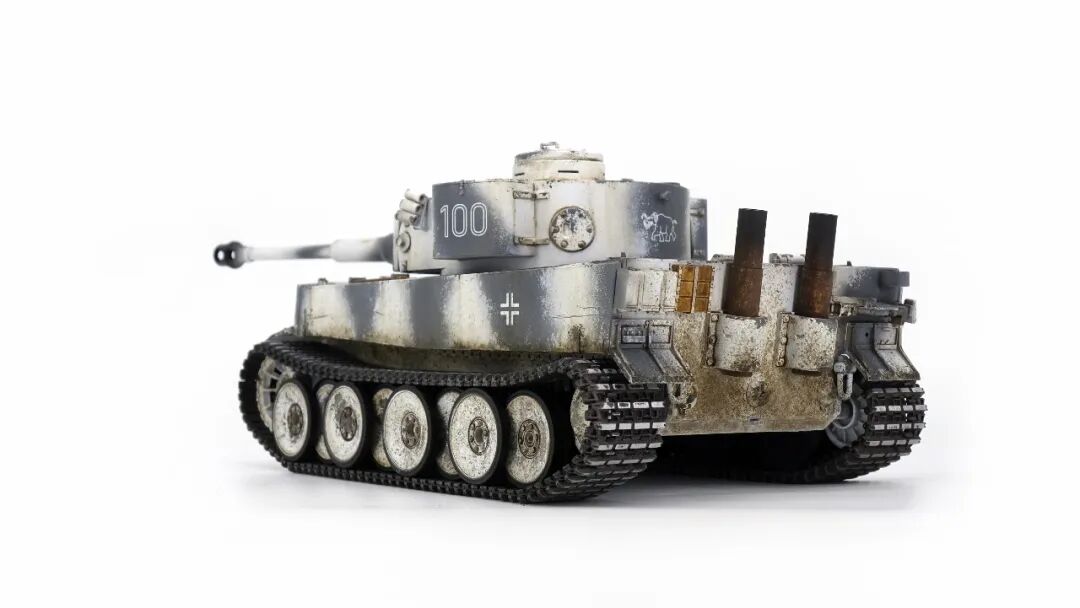
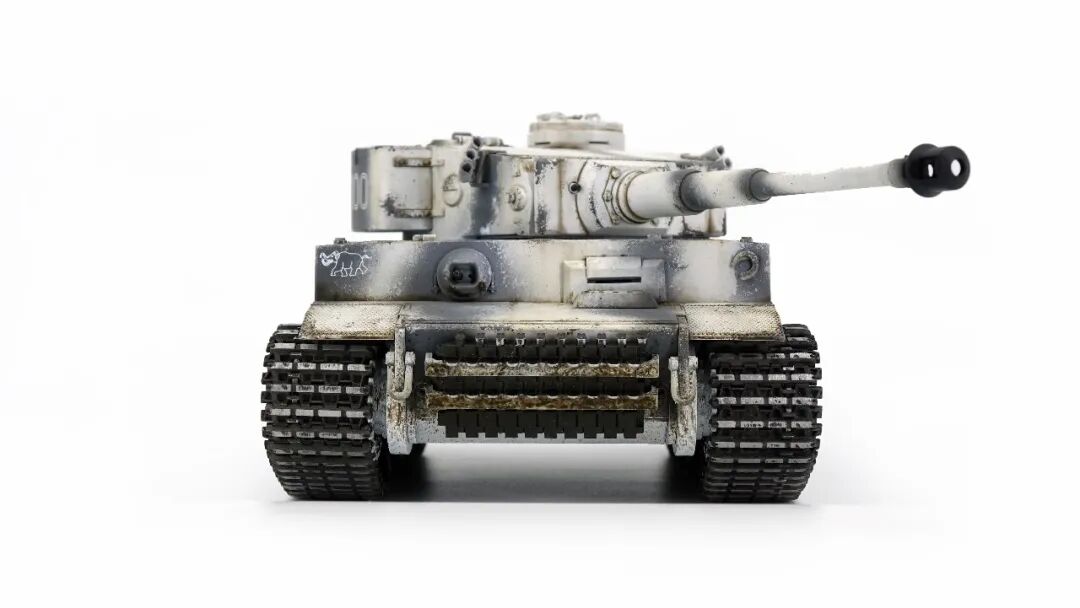
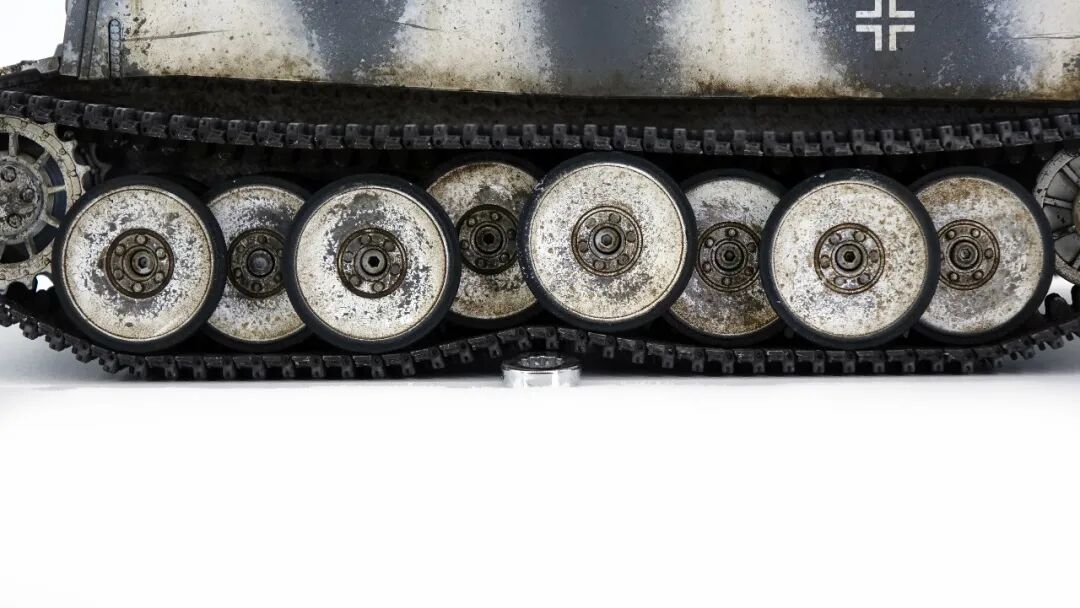
The earliest Tigers differed visibly from the familiar mid- and late-production tanks. Tiger “100” ran without side mudguards, so its wide combat tracks and interleaved road wheels were fully exposed. This gives the early Tiger a particularly raw, purposeful look. The 8.8 cm KwK 36 L/56 gun, the thick, slab-sided armour and the boxy early fittings all show a design rushed into service while it was still being refined.
The Tank Workshop 1/30 model
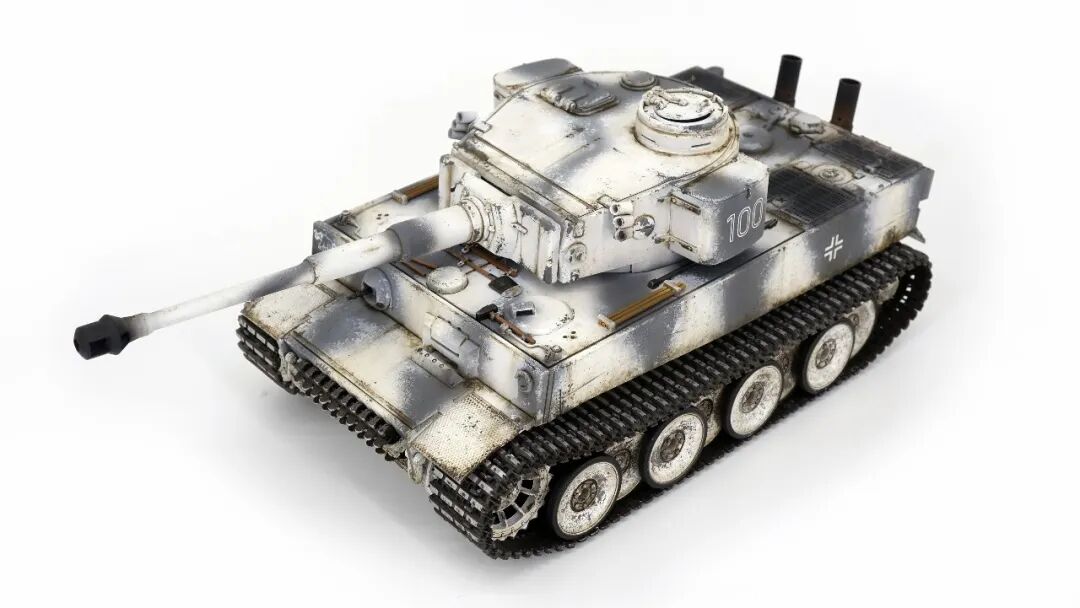
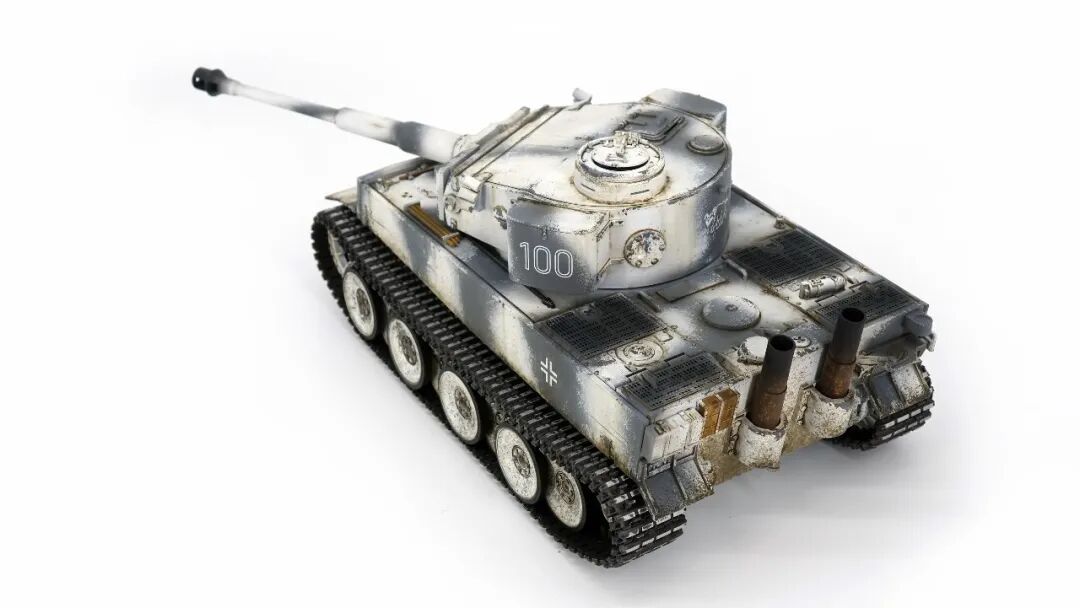
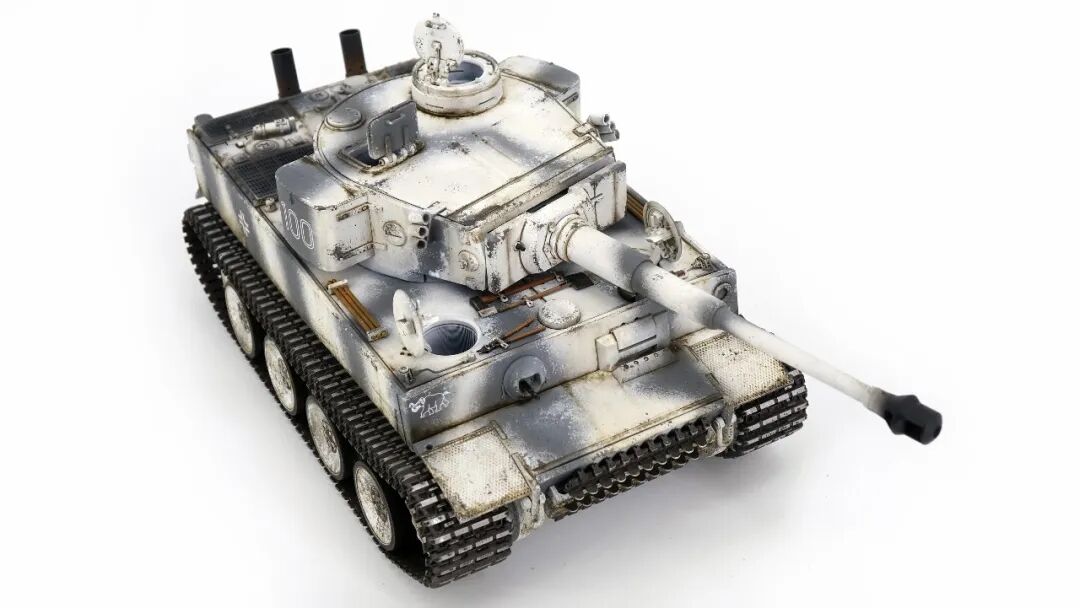
Tank Workshop recreates Tiger “100” as a 1/30 ready-made collector’s model, finished and ready to display straight out of the box.
- Metal construction: the gun barrel, turret, hull, chassis, tracks, swing arms and road wheels are made of metal, which gives the model real weight in the hand.
- Working running gear: the suspension is movable, and the wheels and tracks turn, so the model rolls when pushed.
- Opening hatches: the commander’s, loader’s and driver’s hatches can all be opened.
- Early-pattern details: the model shows the exposed tracks and other early-production details that set this tank apart from later Tigers.
For more details, please contact us
易手的虎式
在第二次世界大战中,像100号虎式这样经历被详细记载的单车并不多见。它隶属于德军第502重坦克营(schwere Panzer-Abteilung 502)。1942年8月底,正是这个营在列宁格勒方向的姆加(Mga)附近,让虎式坦克首次投入实战。这批车是最早出厂的虎式,带有炮塔侧面加装储物箱等极初期特征,因此被收藏圈俗称为“耳朵虎”。
列宁格勒周边的地形,对一辆56吨重的坦克来说极为不利。该营辗转于森林、泥炭沼泽和积水地带之间作战。在最初的几个月里,机械故障和陷车始终困扰着部队,很多时候,战斗的重点只是让手里仅有的几辆虎式维持运转。
在“火花行动”中被缴获
1943年1月,苏军发起“火花行动”(伊斯科拉行动,Operation Iskra),旨在打破列宁格勒之围。1月18日,即沃尔霍夫方面军与列宁格勒方面军会师当天,100号虎式(底盘号250009)驶近第5工人村。据该营自己的损失报告记载,这辆坦克陷入泥炭坑,车组被迫弃车,而此时工人村已被苏军占领。该车车长是约翰内斯·伯尔特(Johannes Bölter),他后来成为最著名的虎式王牌车长之一。
苏军将这辆坦克基本完好地回收。它与在同一地区缴获的121号虎式一起,让苏军第一次得以近距离研究德国这款新型重型坦克。朱可夫元帅后来回忆,他曾下令组建一个专门小组,夺取一辆这样的坦克并将其拖回苏军阵地。据广泛报道,当时的照片显示朱可夫曾亲自察看这辆被缴获的虎式。
从试验场到高尔基公园
100号虎式被送往库宾卡的装甲坦克科学试验场(NIBT试验场)。1943年4月,车上的发动机、武器和设备被拆除,随后苏方用多种口径的火炮对车体和炮塔进行射击,以找出其装甲的薄弱部位。试验结果下发给前线苏军部队,并推动了苏联更强大坦克和火炮的研发。1943年6月,这辆坦克在莫斯科高尔基中央文化休息公园举办的缴获装备展览上公开展出。它最终没能保存下来:和当时大多数战利品一样,它后来被拆毁报废。
极初期型细节
最早期的虎式与人们熟悉的中、后期生产型相比,外观差异明显。100号虎式没有安装侧挡泥板,宽幅的作战履带和交错排列的负重轮完全外露,使极初期虎式显得格外粗犷、充满杀气。8.8厘米 KwK 36 L/56 主炮、厚重的平板式装甲以及方正的早期附件,都体现出这是一款在仍不断完善中就被仓促投入服役的设计。
战车工坊 1/30 模型
战车工坊将100号虎式还原为1/30成品收藏级模型,出厂即完成涂装与组装,开箱即可直接摆放展示。
- 金属结构: 炮管、炮塔、车体、底盘、履带、摇臂和负重轮均为金属材质,拿在手中分量十足。
- 可动行走机构: 悬挂可活动,负重轮和履带可转动,用手推动即可前进。
- 可开启舱门: 车长、装填手和驾驶员舱门均可打开。
- 极初期型细节: 模型还原了外露的履带等极初期生产特征,与后期虎式明显不同。
了解更多详情,请联系我们